Thermal bed bug remediation and monitoring deploys convection heat across infected living quarters to penetrate structural voids that liquid pesticide applications fail to reach. While over-the-counter chemical sprays…
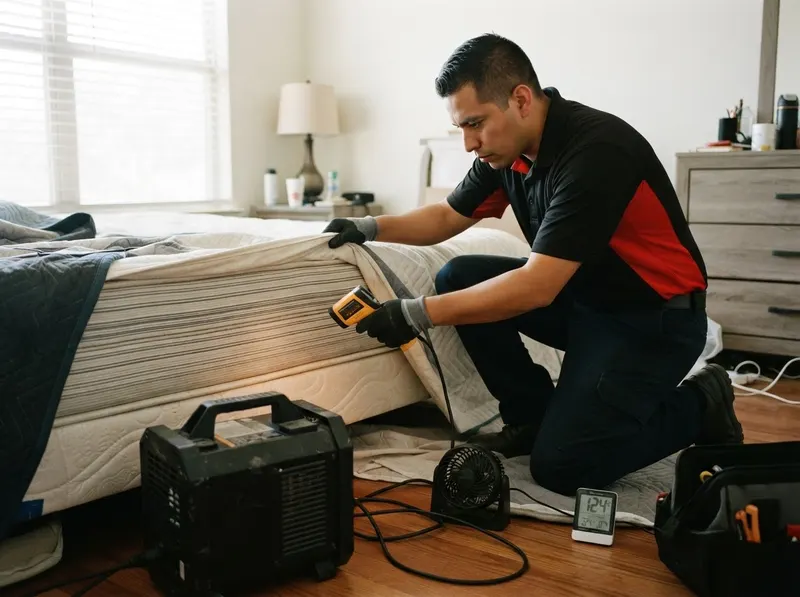
Thermal bed bug remediation and monitoring deploys convection heat across infected living quarters to penetrate structural voids that liquid pesticide applications fail to reach. While over-the-counter chemical sprays cause bed bugs to scatter into wall cavities and baseboards, elevated heat circulating above 122°F denatures cellular proteins and desiccates egg casings inside mattress seams, behind drywall, and under floorboards. This physical barrier approach protects sleeping environments without long-term chemical saturation, making living spaces safe for immediate re-entry once ambient temperatures return to baseline. In historic structures throughout Monte Vista and King William, pier-and-beam construction and original shiplap walls present deep harborages where conventional residual dusts fall short; forced thermal convection drives lethal ambient temperatures deep into these architectural gaps without damaging framing materials.
Properties in dense urban corridors like Southtown and the Medical Center frequently encounter bed bug introductions through shared corridors, rental turnovers, or luggage transfers along Interstate 10 and Loop 410. Choosing thermal remediation over multi-week chemical applications removes the need for multiple follow-up spray visits and eliminates the pest's biological resistance to synthetic pyrethroids. The technical trade-off involves intensive site preparation: heat-sensitive items, including pressurized aerosols, wax candles, vinyl records, fine musical instruments, and prescription medications, must be removed or isolated prior to equipment activation. Industrial heaters powered by external generators gradually bring interior air to target thresholds, maintained continuously for 4 to 8 hours to ensure heat soaks through concrete slabs and subfloors.
Post-treatment barrier protocols solidify eradication in suburban properties across Stone Oak, The Dominion, Terrell Hills, Alamo Heights, Helotes Creek, and Culebra Park. After thermal reduction, technicians install discrete floor interceptors beneath bed posts and upholstered furniture legs, paired with active pheromone or CO2 monitors to detect potential reintroductions from external sources. These post-treatment monitors verify zero insect transit, confirming that structural boundaries remain uncompromised. Service agreements operate without mandatory multi-year contracts, focusing exclusively on rapid mechanical clearing, physical verification, and clear pre-treatment checklists delivered before the remediation team arrives on site.
Every job gets a firm, written price after a free on-site visit.
Tell us about your thermal bed bug remediation and monitoring job in San Antonio and we'll send a clear, written quote, usually the same day.
 BugBoundary Pest Control