Subterranean termite soil treatment functions through continuous non-repellent liquid termiticide placement rather than superficial repellent barriers or visual spot-treatments. Subterranean termites (*Reticulitermes…
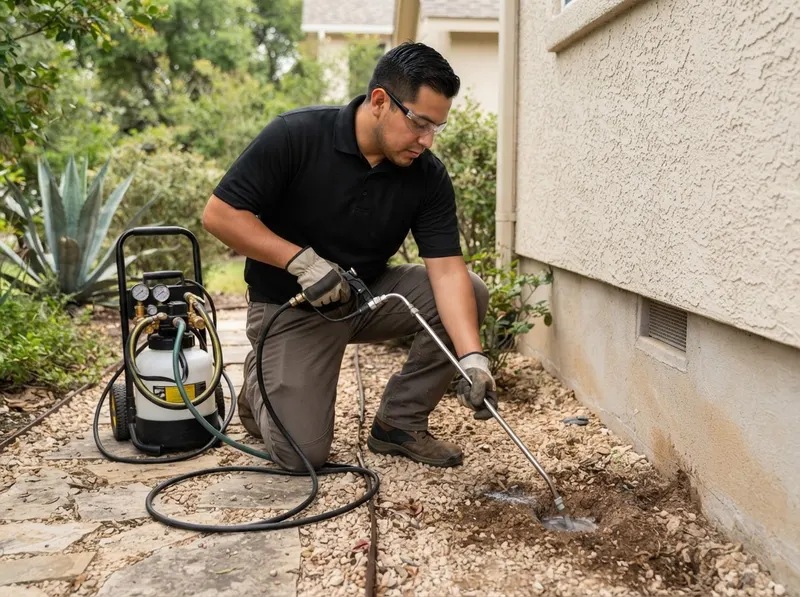
Subterranean termite soil treatment functions through continuous non-repellent liquid termiticide placement rather than superficial repellent barriers or visual spot-treatments. Subterranean termites (*Reticulitermes virginicus* and *Coptotermes formosanus*) dwell in underground soil moisture profiles and tunnel upward through foundation expansion joints, brick weep holes, and utility rough-ins to access interior structural framing. Non-repellent chemical applications, using industry-standard active ingredients such as fipronil at a 0.06% to 0.125% dilution rate, saturate the perimeter backfill at 4 gallons per 10 linear feet per foot of depth according to Texas Department of Agriculture regulatory standards. Foraging worker termites track the non-detectable termiticide back to the central subterranean nest, transferring the active agent throughout the colony via grooming and mutual feeding, ensuring total population reduction rather than merely diverting termites to untreated sections of the structural perimeter.
San Antonio soil profiles present distinctive operational challenges that dictate barrier architecture. Neighborhoods with dense limestone substrata, including Stone Oak and Helotes Creek, require specialized pneumatic rock-drilling through shallow topsoils to reach the subterranean rock-foundation interface. Conversely, high-plasticity clay soils common to Alamo Heights, Monte Vista, and Southtown expand during wet spring weather and contract during extended summer droughts, pulling soil away from foundation grade beams and opening unmonitored pathways for termite shelter tubes. In crawlspace structures typical of historic homes throughout King William and Monte Vista, treatment requires trenching interior pier footings alongside exterior foundation grade walls to eliminate subterranean entry beneath heartwood flooring. Monolithic slab homes common across the Medical Center and Culebra Park demand precision concrete slab drilling along expansion joints and wet-wall plumbing collars to insulate vulnerable moisture access points.
The decisive advantage of perimeter barrier treatment over isolated termite bait station arrays rests on continuous physical interception. While subterranean baiting relies on worker termites wandering into monitoring stations spaced 10 to 20 feet apart, perimeter liquid saturation creates an unbroken chemical boundary that stops foraging insects directly at the structural interface. The operational trade-off requires short-term physical disturbance: specialized core drilling of exterior patio slabs, driveways, and garage aprons, accompanied by trenching through perimeter landscape beds. Foundation soil treatments remain bound to soil particles, yielding long-term subterranean defense while maintaining stability beneath topsoil layers around residential properties.
Every job gets a firm, written price after a free on-site visit.
Tell us about your subterranean termite soil treatment and perimeter defense job in San Antonio and we'll send a clear, written quote, usually the same day.
 BugBoundary Pest Control