South Texas heat and elevated humidity along the Edwards Aquifer recharge zone create extreme breeding pressures for floodwater and container-breeding mosquitoes. Mosquito reduction and automated mist calibration in…
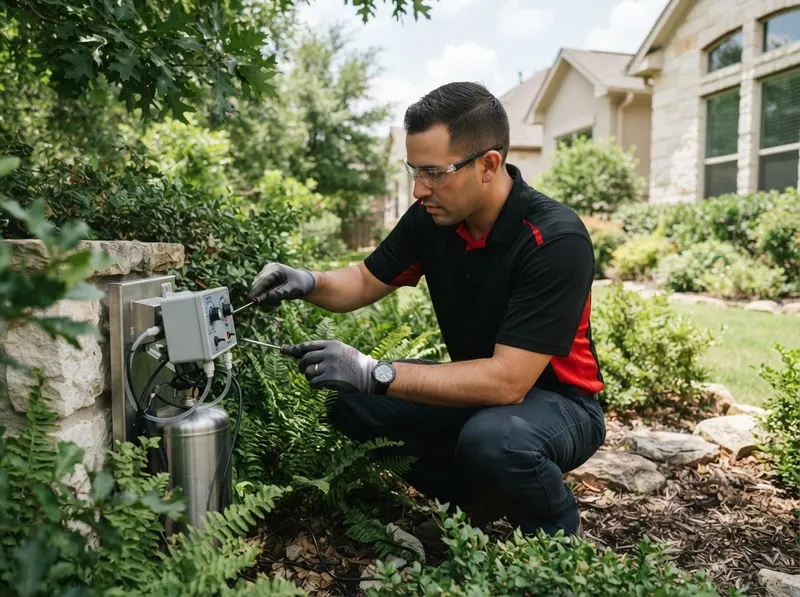
South Texas heat and elevated humidity along the Edwards Aquifer recharge zone create extreme breeding pressures for floodwater and container-breeding mosquitoes. Mosquito reduction and automated mist calibration in San Antonio establishes an immediate, structured boundary between outdoor living spaces and high-density vegetative harborages. In established neighborhoods like Alamo Heights, Monte Vista, and King William, mature pecan and live oak canopies generate shaded microclimates with dense humidity that harbor adult resting populations during midday heat. Targeted barrier applications adhere to the undersides of broadleaf plants, ground cover, and structural overhangs, neutralizing adults on contact while remaining conscious of domestic pets and children once dry.
Automated misting systems provide ongoing perimeter suppression, but environmental factors alter their delivery mechanics over time. Mineral scaling from hard Bexar County water clogs brass nozzles, dropping operational pressure below the required 150 to 200 PSI threshold and causing excessive fluid dripping instead of an atomized micron plume. Routine calibration measures nozzle output, flushes sediment lines, checks electronic siphon valves, and resets spray timers to activate during peak dawn and dusk mosquito flight windows. For acreage and hillside properties in The Dominion, Stone Oak, and Helotes Creek, this mechanical verification prevents premature chemical depletion and ensures complete coverage along property fencelines, patio perimeters, and retaining walls.
Selecting standalone manual treatments suits small city lots in Southtown or Culebra Park where yard size allows complete coverage via directed backpack mist-blowers. Conversely, properties spanning a half-acre or larger in Terrell Hills and the Medical Center sector benefit from permanent line infrastructure paired with quarterly mechanical recalibration. Automated systems demand consistent pressure profiling to prevent phytotoxic burn on ornamental shrubs, whereas periodic manual barrier treatments require reapplication every 21 to 30 days during peak summer activity. The trade-off centers on structural permanence versus manual maintenance cycles, with all applications focused strictly on barrier defense rather than broad, reactive over-spraying.
Every job gets a firm, written price after a free on-site visit.
Tell us about your mosquito reduction and automated mist calibration job in San Antonio and we'll send a clear, written quote, usually the same day.
 BugBoundary Pest Control